Last month, our fellow libertarian blog "Libertarianly Speaking" ran an interesting
article. A few days earlier, the
Huffington Post had run an
article claiming Ron Paul's views of charity were "unrealistic". However, let us take the time to consider what true charity really is.
 |
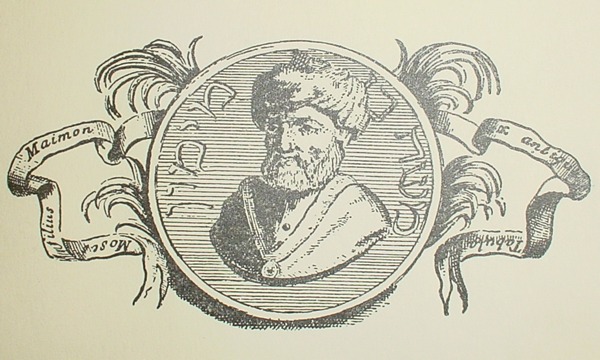
Would Maimonides (top right)
agree with Dr. Paul? I think
so. |
I am Jewish and so cannot speak for Christian values, but I do know what the great Jewish sage
Maimonides said. He listed the eight levels of
Tzedakah (righteous giving - essentially charity) from highest (#1) to lowest (number 8). The lowest was simply "giving unwillingly". This is what we are very often doing now, even if we don't realize it. Through social security to support the poor, through taxes to support other government programs, etc. This is not real charity, or at least not very good charity. Meanwhile, the highest form of
tzedakah was "Giving ... to a person in need ... to result in that person no longer living by relying upon others". As examples, Maimonides included, giving an interest-free loan, a business partnership, or a grant, and finding a job for said person in need. This is exactly the form of charity Dr. Paul and other libertarians have been advocating for years. Of course, Maimonides was many centuries ahead of them, to his credit.
However, government programs that are supposed to help the poor are not only forcing us to perform level 8, but they are doing the exact
opposite of Level 1. Let's take a look at a few examples.
 |
What would Joe the Plumber be like
in a libertarian society? |
- Social security essentially enables the poor to get by for years, so long as they continue to rely on social security. We've heard stories about welfare queens getting free housing without ever having to work. This is good for them, except that they have to continuously rely on others for support. Some would say "well, they couldn't all get jobs". I will address that now.
- It is precisely because of government policies that they can't get jobs. Consider a hypothetical Joe the Plumber. Joe is, needless to say, a plumber, but he doesn't have much experience. As such, he is only capable of generating $7.50 of profit an hour for an employer. Now, minimum wage is $8.00, so no employer is going to hire him to generate $7.50 of money and lose the company $0.50 an hour. However, they would hire him for $7.00 if they legally could. And $7.00/hour is a lot better for Joe than $0.00/hour. Furthermore, after beginning to plumb, Joe would get better at it, and eventually would generate more money for his employer and earn a higher wage. If Joe's employer wouldn't pay up, he would go to another plumbing company that would. It's the Invisible Hand. It's worth noting that 90% of hourly employees make more than minimum wage, even though employers don't have to pay them any more. So it stands to reason that without a minimum wage, employers would still pay competitive salaries.
- Now, let's suppose Joe is a good plumber, but nevertheless, nobody will hire him. He could be an independent plumber who works for himself. He would probably charge less than some large plumbing company, which would certainly appeal to certain people. (If you just want your toilet fixed and don't care who does it, you'd go with Joe, perhaps). Right now, Joe isn't even legally allowed to charge less than minimum wage for his own services. This obviously hurts his chances of getting employed. But what hurts him even more is another government restriction. To do all this work, he would need to take several courses, obtain a license, plus obtain another license for his business, and spend a lot of money doing so. But Joe doesn't have a lot of money. That's why he needs the job, remember? So clearly this hurts him. Without all these red tape restrictions, Joe could easily find work,.
Of course, we can now clearly see that without all the government programs that are supposed to benefit people like Joe, he could easily find work for himself and not have to depend on others for support. Then, we would have achieved the eighth level of tzedakah simply by repealing government programs which are supposed to "help" Joe.
One final note. These programs are funded by tax dollars from people like you and me. This leaves open interesting opportunities. If there is a charitable cause that you are passionate about supporting, which is not covered by the government, you can now give some or all of the tax that would have gone to the government to a private charity. And studies have shown that private charities are twice as cost-effective as the government.
So, if you give $50 to your local soup kitchen, it's really like giving $100 to a government program. Now if you give all $100 (hypothetical amount) that you're no longer paying to the government, you're no worse off and those who do have legitimate excuses for not getting jobs are far better off. Even if you only give $75, both sides are better off. And it doesn't just have to be a general soup kitchen. Presumably, due to that all-important Invisible Hand, charities would sprout up urging people to help individuals who truly can't help themselves. This would include injured veterans, people who can't work due to a disability, etc. It would, of course, also include other charitable causes such as protecting the environment, or feeding starving children in Africa.
Regardless of which charities arise, I do have faith in humanity to take care of their own. And I have faith in individual groups to take care of their own too. Many religions are known for this, as are many ethnic groups. I don't view this as a problem, rather I think it's a good thing. Begin by helping those who are closest to you. Then move out into the local area, your state, your country, and the world. Perhaps this is a form of libertarian socialism. But as I have said, I am a "libertarian without labels". I incorporate any form of libertarianism I want into my philosophy, and choose not to label it otherwise. So I don't have a problem with that claim.